If you’ve ever looked up at a plane crossing the sky and wondered what it would take to sit in that cockpit, you’re not alone.
One of the first questions aspiring pilots ask is: “How long does it take to become a pilot?”
The honest answer?
It depends on what kind of pilot you want to become!
At D&J Aviation, we believe in giving you realistic timelines based on actual student experiences, not unrealistic FAA minimums that rarely reflect reality. Whether you’re dreaming of weekend flying adventures or pursuing an airline career, understanding the timeline helps you plan your journey into aviation.
Let’s dive in and break down exactly what you can expect.
What Type of Pilot Do You Want to Be?
Here’s the thing: the timeline to become a pilot varies a lot based on your aviation goals. Think of it like asking “how long does it take to become a musician?” Well, are you learning guitar for fun or trying to join an orchestra?
Here’s what we’re talking about:
- Recreational Private Pilot: 3 to 4 months
- Instrument-Rated Private Pilot: 6 to 8 months
- Commercial Pilot (Career-Ready): 8 to 12 months
- Airline-Ready Professional Pilot: 11 to 16 months of training, plus additional time building to 1,500 hours
Let’s break down each stage of the journey and what you can realistically expect when you train with us at D&J Aviation.
Private Pilot License: Your First 3 to 4 Months
Your aviation journey begins with the Private Pilot License, or PPL for short. This is your gateway to the freedom of flight, and honestly, it’s one of the most exciting times in your training. At D&J Aviation, most students complete their private pilot training in about 8 to 12 weeks (that’s 3 to 4 months).
What to Expect:
Weeks 1 and 2: You’ll dive into ground school fundamentals covering aircraft systems, aerodynamics, and regulations. Sounds intense, right? But here’s the fun part: you’ll also start your first flight lessons. You’ll learn preflight procedures, how to taxi (yes, planes taxi just like cars drive, but cooler), basic maneuvers, and your first takeoffs and landings. That first takeoff? Unforgettable.
Weeks 3 and 4: Now you’re getting the hang of things. You’ll refine your control of the aircraft in different configurations, practice stalls and slow flight (which sounds scary but is actually really useful), and work on ground reference maneuvers. This is when you’ll prepare for one of aviation’s most memorable milestones: your first solo flight.
Weeks 5 and 6: Here it comes! You’ll achieve your first solo flight, typically after about 15 to 20 hours of training. Picture this: your instructor gets out of the plane, closes the door, and says “take it around the pattern.” It’s just you and the airplane. It’s terrifying and amazing and you’ll never forget it. After this, you’ll begin local solo practice flights and start planning cross-country flights to other airports.
Weeks 7 and 8: Your training expands to dual and solo cross-country flights, night flying (yes, flying at night is as cool as it sounds), and an introduction to instrument flying.
Weeks 9 through 12 (as needed): Final checkride preparation, the FAA knowledge exam, and your practical test. Then you’re a licensed pilot!
Flight Time Reality Check:
Here’s where we get real with you. While the FAA requires a minimum of 40 flight hours, most students at D&J Aviation complete their private pilot license with around 60 to 70 hours of flight time.
Why the difference? Because we want you to be truly proficient and confident, not just barely qualified. We base our programs on realistic averages because that’s what actually happens in the real world. Very few people pass their checkride at exactly 40 hours, and anyone who tells you otherwise is probably setting you up for disappointment (and extra unexpected costs).
Instrument Rating: Add 3 to 4 More Months
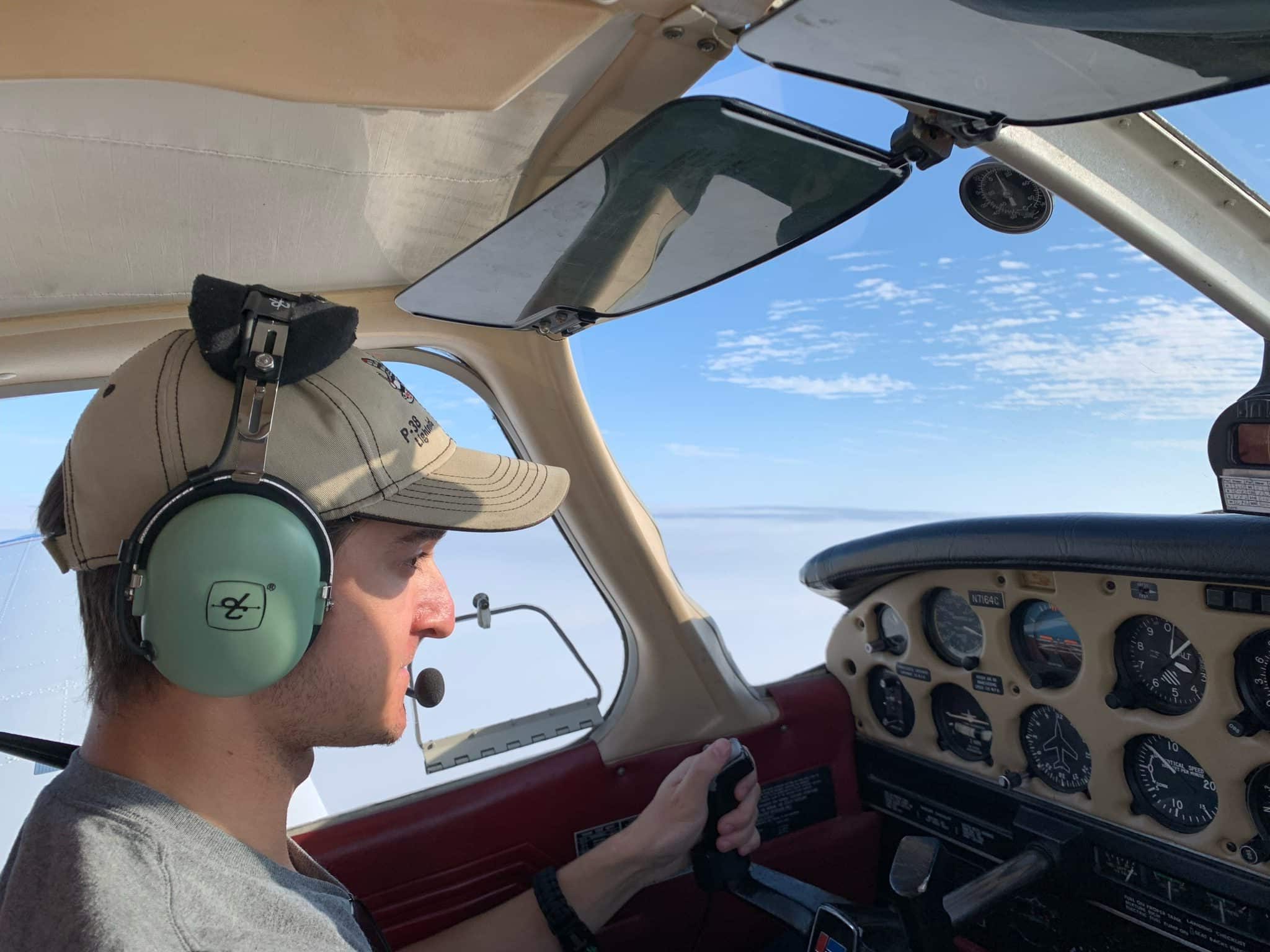
Once you have your private pilot license, the Instrument Rating is your next major milestone. This rating allows you to fly in clouds, fog, and challenging weather conditions. It’s a must-have for any pilot pursuing professional aviation, and honestly, it makes you a way better pilot overall.
At D&J Aviation, the Instrument Rating typically takes about 8 to 12 weeks (3 to 4 months) to complete.
Your Training Timeline:
Weeks 1 and 2: Ground school covering IFR regulations, systems, and procedures. You’ll start simulator and flight training focusing on attitude instrument flying. This is where you learn to trust your instruments instead of your gut (which, counterintuitively, can lie to you in the clouds).
Weeks 3 and 4: VOR, GPS, and ILS tracking with dual instruction on en-route procedures and holding patterns. If those acronyms sound like alphabet soup, don’t worry. You’ll learn what they all mean and how to use them.
Weeks 5 and 6: Cross-country IFR flights with real ATC clearances and approaches at different airports. Now you’re talking to actual air traffic control, getting cleared for approaches, and feeling like a real pilot.
Weeks 7 and 8: Precision and non-precision approaches with emphasis on decision-making and risk management. This is where the training really levels up.
Weeks 9 through 12 (as needed): Mock checkrides, final polish, FAA knowledge exam, and your instrument checkride.
Want to Go Faster?
If you’re able to fly more frequently, D&J Aviation offers accelerated instrument training that can compress this timeline to as little as 2 weeks. No joke. Flying more frequently helps accelerate skill development and can actually reduce your total training time and cost. It’s intense, but if you can swing it, it’s incredibly efficient.
Commercial Pilot License: Another 2 to 3 Months
Your Commercial Pilot License marks your transformation from recreational pilot to aviation professional. This is the big one. This is when you can legally be compensated for your flying. Get paid to do what you love? Yes, please.
The commercial training itself typically takes about 11 to 14 weeks (2 to 3 months) at D&J Aviation.
Training Progression:
Weeks 1 and 2: Advanced aerodynamics, regulations, and commercial maneuvers like chandelles, lazy eights, and steep spirals. These maneuvers have awesome names and they’re actually pretty fun to fly.
Weeks 3 and 4: Complex aircraft systems training and night flying requirements. You’ll get familiar with more sophisticated aircraft and their systems.
Weeks 5 through 8: Day and night cross-country flights, both solo and dual, while building time toward the 250-hour requirement. This is where you really rack up the hours and experience.
Weeks 9 and 10: Refining maneuvers to commercial standards with scenario-based training. Everything needs to be tighter, smoother, and more professional.
Weeks 11 through 14 (as needed): FAA written exam, oral prep, checkride preparation, and your commercial pilot checkride.
By the end of your commercial training, you’ll have accumulated approximately 250 total flight hours. That’s the foundation for your professional aviation career.
Multi-Engine Rating: 5 Days to 1 Month
Here’s where D&J Aviation really stands out, and we’re pretty proud of this one. Our trademarked 5-Day Multi-Engine Program gets you multi-engine rated in literally five days, with your checkride guaranteed on day five.
Why This Matters:
Let’s talk about the elephant in the room. The biggest challenge in multi-engine training isn’t the flying. It’s getting a checkride date. At other schools, you might finish your training and then wait weeks or even months for an examiner to become available.
Not here. Our exclusive examiner relationships mean you won’t wait weeks or months. You’ll complete 12 hours of flight training and comprehensive ground instruction, then take your checkride exactly when scheduled. Day five. Boom. Done.
For students who prefer a more relaxed pace or need additional multi-engine experience, we also offer flexible time-building options that can extend the training over several weeks to a month. Both options work great, it just depends on your schedule and learning style.
Flight Instructor Ratings: 3 to 4 More Months
Here’s a secret about the aviation industry: to build the 1,500 hours required for airline employment (we’ll get to that in a moment), most pilots become flight instructors. The three instructor ratings (CFI, CFII, and MEI) typically take about 3 to 4 months to complete at D&J Aviation.
This is where your aviation knowledge deepens significantly. There’s a saying in aviation: “To teach is to learn twice.” Teaching others to fly makes you a better pilot while you build the hours airlines require. Plus, you’re getting paid to fly. It’s a win-win.
The Complete Path to Airlines: 11 to 16 Months Plus Time Building
If your goal is to fly for the airlines (and let’s be honest, that’s the dream for a lot of people), here’s the complete realistic timeline at D&J Aviation:
Training Phase: 11 to 16 Months
- Private Pilot License: 3 to 4 months
- Instrument Rating: 3 to 4 months
- Commercial License: 2 to 3 months
- Multi-Engine Add-On: 5 days to 1 month
- Flight Instructor Ratings: 3 to 4 months
Total training time: 11 to 16 months
Not bad, right? In about a year to a year and a half, you go from never touching an airplane to being a certified flight instructor.
Time-Building Phase: 12 to 24+ Months
But wait, there’s more! After completing your instructor ratings, you’ll have roughly 250 to 300 hours. Airlines require 1,500 total hours of time building to hire you. It’s an FAA regulation, not something we made up, so everyone has to do it.
Most D&J graduates build these hours by working as flight instructors, often right here at D&J Aviation. How long this takes depends on how much you fly:
- Full-time instructing (80 to 100 hours per month): 12 to 15 months to reach 1,500 hours
- Part-time instructing (40 to 50 hours per month): 24 to 30 months to reach 1,500 hours
Many of our successful graduates join our instructor team after completing their ratings. They build their hours while getting paid to fly and helping the next generation of pilots achieve their dreams. Then, when they hit 1,500 hours, they head off to the airlines. It’s a pretty sweet system.
Factors That Affect Your Timeline
Several factors influence how quickly you progress through flight training. Let’s talk about the real stuff that impacts your schedule:
1. Training Frequency
This is probably the biggest factor. Flying 3 to 4 times per week leads to faster skill retention and shorter overall timelines than flying once a week. Think about it like learning a language. If you practice every day, you’ll pick it up way faster than if you practice once a week.
The more frequently you fly, the less time you spend relearning skills from your previous lesson. You’re building on fresh knowledge instead of constantly reviewing.
2. Weather
Florida is one of the best places in the country for flight training. We have great weather year-round. But let’s be real: weather still impacts training schedules. Thunderstorms, low visibility, and high winds can delay lessons, especially during summer months when afternoon thunderstorms are basically a daily occurrence.
The good news? Even with weather delays, Florida is still miles better than trying to learn to fly in, say, Michigan in January.
3. Personal Pace and Learning Style
Everyone learns differently. Some students progress quickly through certain phases while needing more time with others. Maybe you nail landings right away but struggle with navigation. Or vice versa. It’s all completely normal.
At D&J Aviation, we match you with an instructor based on your personality and learning style, and you’ll typically keep the same instructor throughout your training. This consistency is a key factor in maintaining progress. Your instructor learns how you learn, and that makes everything more efficient.
4. Schedule Flexibility
Here’s an insider tip: students who can fly during weekday mornings typically progress faster. Why? Better weather conditions, more instructor availability, and less air traffic congestion. If you can swing it, morning flights are golden.
5. Prior Experience
Any previous flight experience, even if it was years ago or at a different school, can accelerate your timeline. Those “rusty” skills often come back faster than learning from scratch. It’s like riding a bike. A very expensive, very complicated bike that flies. But you get the idea.
Full-Time vs. Part-Time Training
Your availability significantly impacts your timeline. Let’s compare:
Full-Time Training
If you can dedicate yourself to training full-time (flying 4 to 5 days per week), you can complete the entire airline pilot program in closer to the 11 to 12 month range.
Advantages:
- Faster skill development and retention
- More efficient use of training funds
- Earlier entry into professional aviation
- Less material forgotten between lessons
The Reality: This requires a serious commitment. You’re basically making flight training your full-time job for a year. It’s intense, it’s immersive, and it works really well if you can make it happen.
Part-Time Training
Most students balance flight training with work, school, or family commitments. Flying 2 to 3 times per week extends the timeline toward 14 to 16 months or longer, and that’s perfectly fine.
Advantages:
- More manageable financial pacing
- Time to absorb and process information
- Ability to maintain current employment
- Less overwhelming than full-time immersion
The Reality: This is what most people do. Life happens. You have bills to pay, families to take care of, jobs to keep. Part-time training lets you pursue your aviation dreams without putting your entire life on hold.
Both approaches work. It simply depends on your personal circumstances and preferences. There’s no “better” way, just the way that works for you.
Why D&J Aviation’s Timelines Are Realistic
You might find other flight schools advertising faster timelines based on FAA minimums. Here’s why we’re different, and why we think our approach is better:
At D&J Aviation, we base our timelines on actual student averages, not optimistic FAA minimums that rarely reflect reality. We’ve been training pilots long enough to know that:
- Very few students complete training in minimum hours
- Weather, scheduling, and life happen
- True proficiency takes longer than minimum proficiency
- We’d rather you be genuinely prepared than barely qualified
Look, we could advertise lower prices and faster timelines based on FAA minimums. It would probably look great on our website. But then you’d show up, train for longer than expected, pay more than you budgeted, and feel misled. That’s not how we operate.
Our transparent approach means you won’t be surprised by extending timelines or unexpected costs. You’ll know from the beginning what to realistically expect. No surprises, no hidden fees, no “oh by the way, most students actually need way more hours than we told you.”
What About Accelerated Programs?
D&J Aviation offers accelerated options for certain ratings, particularly our 5-Day Multi-Engine Program and accelerated instrument training. These intensive programs work well when:
- You can dedicate full-time focus
- You have a specific deadline or goal
- You want to minimize total training time and cost
- You learn well in immersive environments
However, we’re honest about accelerated training: it’s not for everyone. Some phases of training (like private pilot) benefit from time to process and practice between lessons. Your brain needs time to absorb all the new information, and sometimes sleeping on it actually helps.
Think of it like cramming for a test versus studying consistently over time. Both can work, but one might suit your learning style better than the other.
Starting Your Journey Today
The best time to start your aviation journey is now. Whether you’re 18 or 48, whether you have two hours a week or twenty, D&J Aviation can create a training pathway that works for your life and your goals.
Your First Step: The Discovery Flight
Before committing to the full journey, we recommend starting with a discovery flight. This introductory flight lets you experience flying firsthand, meet our instructors, and see our facilities. It’s the perfect way to confirm that aviation is truly your calling, not just your dream.
Here’s a secret: many of our airline pilot program students started with a simple discovery flight, unsure if they could really do it. They were nervous, excited, maybe a little scared. Now they’re building hours toward their airline careers, living the dream they once thought was impossible.
That could be you.
The Bottom Line
So, back to our original question: How long does it take to become a pilot?
Here’s the straightforward answer:
- Recreational private pilot: 3 to 4 months
- Airline-ready professional: 11 to 16 months of training, then 12 to 24+ months of instructing to build to 1,500 hours
- Total time from zero experience to airline interview: Approximately 2 to 3.5 years
Is it a commitment? Absolutely. Is it achievable? Without question.
At D&J Aviation, we’ve guided hundreds of students from their first discovery flight to their first day as airline pilots. We’re not here to process you through an assembly line. We’re here to become your partners in your aviation journey.
We know your name. We track your progress. We celebrate your milestones. When you solo for the first time, we’ll be there cheering (and yes, there’s a tradition involving a shirt and scissors, but that’s a surprise for later).
That dream you’ve carried since childhood, watching planes overhead and wondering what it would be like to fly? It’s not just a dream. It’s a realistic career path that starts with a single decision: the decision to begin.
The question isn’t “how long will it take?” The real question is “when do I start?”
Ready to start your aviation journey?
Schedule your discovery flight and take the first step toward your pilot’s license. Your future in the skies is closer than you think.