Let’s cut right to the chase. If you’re dreaming of becoming an airline pilot and you’re starting from zero flight experience, you’re looking at an investment of roughly $60,000 to $100,000 to get all the certificates and ratings you need. That’s the honest answer most flight schools won’t give you upfront.
But here’s the thing: that number alone doesn’t tell the whole story. The actual cost of flight school depends on what kind of pilot you want to become, how quickly you want to complete your training, and whether you’re training at a school that’s honest about realistic timelines or one that advertises impossibly low prices based on FAA minimums that almost nobody achieves.
At D&J Aviation, we believe in transparent pricing from day one. No bait and switch. No hidden fees. No “oops, most students actually need way more hours than we told you.” Just honest numbers based on what real students actually experience.
Let’s break down the real costs of flight training and what you can expect to invest at each stage of your aviation journey.
Why Flight School Costs Vary So Much
Before we dive into specific numbers, you need to understand why flight school costs vary dramatically from one school to another and one student to another.
The Minimum Time Trap
Here’s something you’ll see all over the internet: flight schools advertising incredibly low prices for pilot training. Private pilot license for $8,000! Commercial pilot for $15,000! Sounds great, right?
There’s a catch. These prices are almost always based on FAA minimum flight time requirements. The FAA says you need a minimum of 40 hours to get your private pilot license. So schools do the math on 40 hours and advertise that price.
The problem? We’ve been training pilots for years, and we honestly don’t know anyone who has gotten their license in exactly 40 hours. Most students need 60 to 70 hours to develop real proficiency and pass their checkride.
Here’s the math on that:
- School advertises: 40 hours at $175/hour = $7,000 for flight time
- Reality: 65 hours at $175/hour = $11,375 for flight time
That’s a $4,375 difference just in flight time. Add in instructor fees, materials, and other costs, and suddenly that “cheap” program isn’t so cheap anymore.
At D&J Aviation, we price our programs based on realistic averages, not wishful thinking. Yes, our upfront prices might look higher than some competitors. But they’re honest, and you won’t get hit with surprise costs halfway through your training.
What’s Included (and What’s Not)
When comparing flight school costs, pay close attention to what’s actually included:
- Aircraft rental (This is usually the biggest cost)
- Flight instructor fees (Usually billed separately per hour)
- Ground instruction (Some schools include this, others don’t)
- Training materials (Books, online courses, etc.)
- Checkride fees (Usually $600 to $1,000+ paid directly to the examiner)
- Written exam fees (Paid to the FAA testing center)
- Medical certificate (Paid to an Aviation Medical Examiner)
Some schools bundle everything. Others nickel and dime you with separate fees. Make sure you’re comparing apples to apples.
Private Pilot License: Your First Major Investment
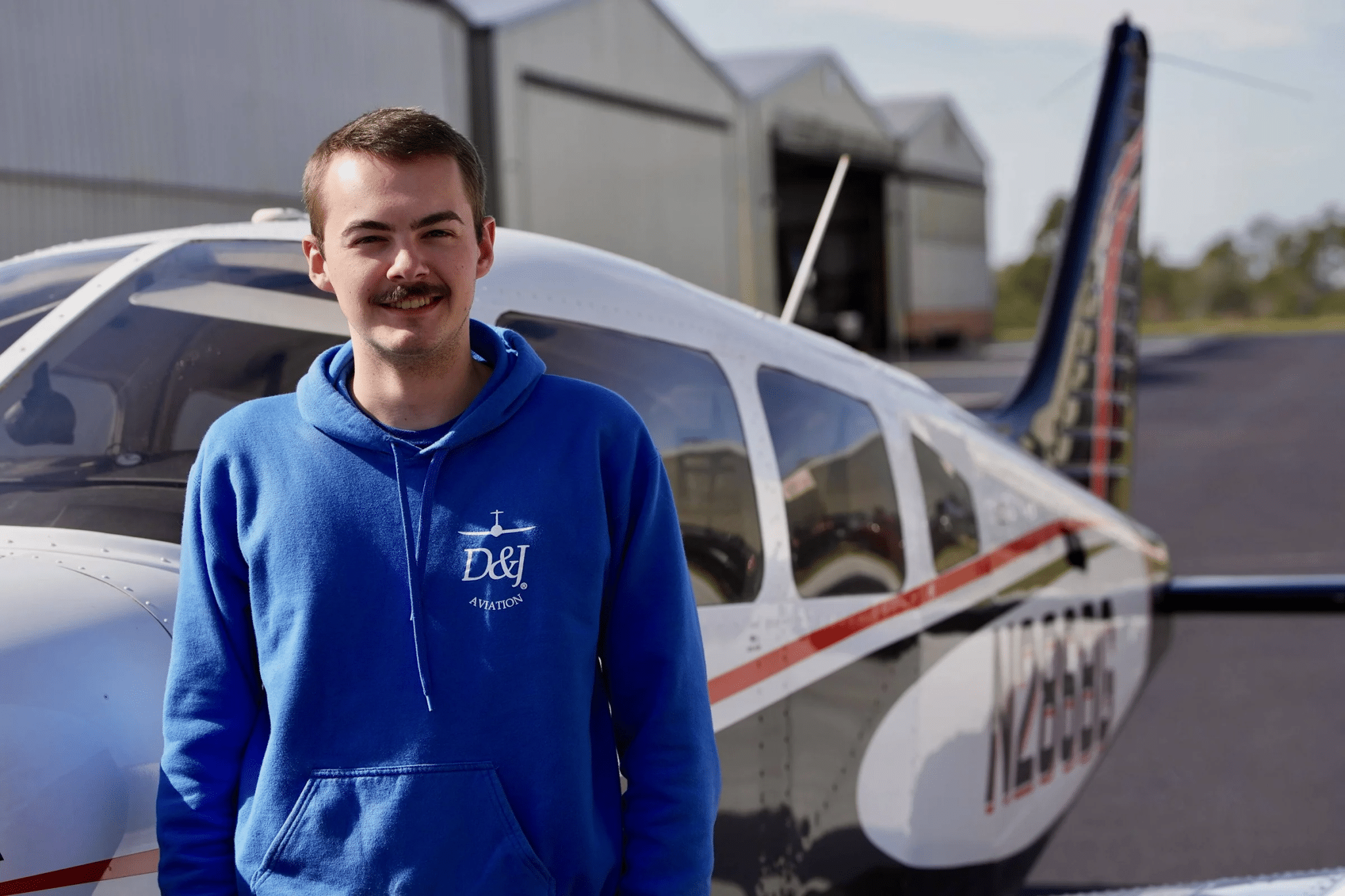
Your journey into aviation starts with the Private Pilot License. This is your foundation, your gateway to everything else in aviation.
The Real Cost at D&J Aviation
At D&J Aviation, our Private Pilot Program is priced at $15,380.00 based on realistic training timelines.
Here’s the breakdown:
- Flight Hours: $175.00 x 50 Hours = $8,750.00
- Flight Instructor: $78.00 x 85 Hours = $6,630.00
- Training Kit: Variable based on curriculum choice
- Checkride Fees: Variable based on examiner
What This Gets You
That investment covers:
- All your flight training in modern Piper Warriors
- Ground instruction and exam preparation
- Use of aircraft with advanced avionics
- Comprehensive curriculum and materials
- The privilege to fly anywhere in the US under VFR conditions
- The ability to carry passengers
- The foundation for all your future aviation training
Why It Costs This Much
Let’s be real: $15,380 is a lot of money. So what are you actually paying for?
Aircraft Operating Costs: That $175 per hour isn’t pure profit for the flight school. It covers fuel (aviation fuel is expensive), insurance (aviation insurance is really expensive), maintenance (aviation maintenance is incredibly expensive), hangar fees, and a small profit margin to keep the lights on.
Instructor Expertise: Your flight instructor has spent years and tens of thousands of dollars becoming qualified to teach you. They have hundreds or thousands of hours of flight experience. You’re paying for that expertise and their time.
Safety and Maintenance: Those aircraft you’re flying are maintained to exacting FAA standards. Regular inspections, repairs, upgrades, and safety equipment all factor into the cost.
Support Infrastructure: The facility, fuel trucks, scheduling systems, maintenance team, customer service, and everything else that makes a flight school run smoothly costs money to maintain.
Instrument Rating: Adding Professional Capability
Once you have your private pilot license, the Instrument Rating is your next step if you’re pursuing professional aviation or just want to be a more capable pilot.
The Real Cost at D&J Aviation
The Instrument Rating at D&J Aviation costs $10,900.00.
Here’s the breakdown:
- Flight Hours: $175.00 x 30 Hours = $5,250.00
- Solo Flight Hours: $175.00 x 10 Hours = $1,750.00
- Flight Instructor: $78.00 x 50 Hours = $3,900.00
- Training Materials: Variable based on curriculum choice
- Checkride Fees: Variable based on examiner
Why This Rating Matters
The instrument rating teaches you to fly in clouds, fog, and low visibility. It’s required for virtually all professional aviation careers. It also makes you a significantly better and safer pilot overall.
Plus, many insurance companies and aircraft rental operations require or heavily discount rates for instrument-rated pilots. It pays for itself in safety and capability.
Accelerated Options
If you can train full-time, D&J Aviation offers accelerated instrument training that can be completed in as little as 2 weeks. This intensive approach often reduces total costs because you’re flying more frequently and retaining skills better between lessons.
Commercial Pilot License: Your Professional Certificate
The Commercial Pilot License is where you transform from recreational pilot to aviation professional. This is when you can legally be compensated for flying.
The Real Cost at D&J Aviation
This is where it gets interesting because there are two paths:
Commercial License Only (if you already have the required 250 hours): $7,405.00
- Flight Hours: $175.00 x 15 Hours = $2,625.00
- TAA Aircraft Time: $205.00 x 10 Hours = $2,050.00
- Flight Instructor: $78.00 x 35 Hours = $2,730.00
- Training Materials: Variable
- Checkride Fees: Variable
Full Commercial Program (building from instrument rating to 250 hours): $30,450.00
- Flight Hours: $175.00 x 140 Hours = $24,500.00
- TAA Aircraft Time: $205.00 x 10 Hours = $2,050.00
- Flight Instructor: $78.00 x 50 Hours = $3,900.00
- Training Materials: Variable
- Checkride Fees: Variable
Most students pursuing airline careers need the full program because they’re building from around 100 hours after instrument rating up to the 250 hours required for commercial.
The Time-Building Reality
Here’s something many flight schools don’t emphasize: a significant portion of commercial training is just building flight hours. You need 250 total hours to take your commercial checkride. If you have 110 hours after your instrument rating, you need 140 more hours.
That time building is expensive, but it’s required by the FAA. There’s no shortcut around it.
Multi-Engine Rating: Standing Out from the Crowd
The multi-engine rating adds twin-engine capability to your certificate and makes you significantly more competitive for professional aviation jobs.
The Real Cost at D&J Aviation
This is where D&J Aviation really shines. Our trademarked 5-Day Multi-Engine Program costs $6,388.00.
Here’s the breakdown:
- Flight Training: $349.00 x 12 Hours = $4,188.00
- Flight Instructor: $88.00 x 25 Hours = $2,200.00
- Training Materials: Included at no additional charge
- Checkride Fee: Variable (paid directly to examiner)
Why This is Actually a Great Deal
Multi-engine training at other schools often costs similar amounts, but here’s the kicker: they can’t guarantee your checkride date. Students finish training and then wait weeks or months for examiner availability.
Our exclusive examiner relationships guarantee your checkride happens on day five. No waiting. No additional practice flights while you wait. No uncertainty. You show up Monday, and you leave Friday with your multi-engine rating (weather permitting, of course).
That guaranteed scheduling alone can save you hundreds or thousands of dollars in additional training costs.
Flight Instructor Ratings: Building Hours While Getting Paid
After your commercial and multi-engine ratings, most pilots pursuing airline careers become flight instructors. Why? Because you need 1,500 total hours to get hired by airlines, and instructing is how you build those hours while actually getting paid to fly.
You’ll need three instructor ratings:
- CFI (Certified Flight Instructor)
- CFII (Certified Flight Instrument Instructor)
- MEI (Multi-Engine Instructor)
The process typically takes 3 to 4 months and costs several thousand dollars per rating. While we don’t have specific pricing listed here, expect each rating to be in a similar range to your other training costs.
Here’s the good news: many D&J graduates join our instructor team after earning their ratings. You build your hours, earn money, and help train the next generation of pilots. It’s a win all around.
The Complete Zero to Airline-Ready Cost
Okay, let’s add it all up. If you’re starting from zero experience and want to become airline-ready:
Private Pilot License: $15,380
Instrument Rating: $10,900
Commercial License (Full Program): $30,450
Multi-Engine Rating: $6,388
Flight Instructor Ratings (estimate for all three): $15,000 to $25,000
Checkride Fees, Materials, Medical Certificates, etc.: $3,000 to $5,000
Total Investment: Approximately $80,000 to $95,000
This gets you from zero experience to roughly 250 to 300 flight hours with all the ratings needed to work as a flight instructor and build toward the 1,500 hours airlines require.
Hidden Costs to Consider
Beyond the direct training costs, there are other expenses to factor into your budget:
Living Expenses
If you’re training full-time, you still need to eat, pay rent, and cover your normal living expenses during the 11 to 16 months of training. This is often the biggest overlooked cost.
Transportation
Getting to and from the airport for lessons, especially if you’re training multiple times per week.
Additional Training
Some students need extra hours beyond the averages. Weather delays, scheduling challenges, or just needing more time to master certain skills can add costs.
Medical Certificates
You’ll need an FAA medical certificate to train. A third-class medical costs around $100 to $150. Eventually, you’ll need a first-class medical for airline flying, which costs more.
Written Exams
Each rating requires passing a written exam. These cost around $175 to $200 each and are paid to the FAA testing centers.
Headset
You’ll want your own aviation headset. Decent ones start around $200, but quality headsets can run $800 to $1,000. It’s worth the investment for comfort and hearing protection.
Financing Your Flight Training
Let’s be honest: not everyone has $80,000 sitting around. So how do people actually pay for flight training? For many, flight school financing is a big help.
Pay as You Go
Many students pay for training as they go, flying when they can afford it. This spreads costs out but extends your timeline.
In-House Financing
D&J Aviation offers financing programs for qualified applicants. These payment plans can make training more accessible without requiring the full amount upfront.
Personal Loans
Some students use personal loans or home equity to finance training. Shop around for competitive rates.
Savings and Planning
Some people save for a year or two before starting training, building up enough to cover the full program without financing.
Working While Training
Many students work part-time or full-time while training, which extends the timeline but keeps them debt-free or minimizes borrowing.
The Return on Investment
Flight training is expensive. There’s no sugarcoating it. But let’s talk about the return on that investment.
Airline Pilot Salaries
- Regional Airline First Officers: Typically start at $50,000 to $80,000 annually
- Regional Airline Captains: Often earn $100,000 to $150,000+
- Major Airline First Officers: $100,000 to $200,000+
- Major Airline Captains: $200,000 to $400,000+ at the top carriers
Career Timeline
Starting from zero, most pilots reach regional airlines in about 2 to 3.5 years. After 3 to 5 years at regionals, many move to major airlines. Do the math on those salaries, and the investment in training pays off relatively quickly.
Beyond Money
Yes, pilots can earn good money. But there’s more to it than salary. You’re getting paid to travel, to see the world from a perspective few people ever experience, and to do something genuinely challenging and rewarding. That’s worth something too.
How D&J Aviation’s Pricing is Different
Remember at the beginning when we talked about schools advertising unrealistically low prices? Here’s why our approach is different:
Based on Real Averages
We price programs on what students actually experience, not optimistic FAA minimums. This means fewer surprises and better budget planning.
Transparent from Day One
When you talk to us, we give you the real numbers. We explain what’s included, what’s extra, and what you can realistically expect to spend. No bait and switch.
Quality Over Cheap
We could cut costs by using older aircraft, hiring less experienced instructors, or cutting corners on maintenance. We don’t. You’re paying for quality training in modern aircraft with experienced instructors.
Long-term Value
Cheap flight training that takes twice as long or leaves you unprepared isn’t actually cheap. Quality training that gets you through efficiently with real skills is the better value, even if it costs more upfront.
Comparing Flight School Costs: What to Ask
When you’re shopping around (and you should shop around), here are the right questions to ask:
About Pricing
- “What’s your total cost based on actual student averages, not FAA minimums?”
- “What exactly is included in that price?”
- “What are the additional costs I should budget for?”
- “Do you offer any block time discounts or package deals?”
About Value
- “What’s the average age and condition of your training aircraft?”
- “What avionics packages do your planes have?”
- “What’s your instructor retention rate?”
- “What’s your first-time checkride pass rate?”
About Timeline
- “How long does the average student take to complete this program?”
- “What happens if I need extra training time?”
- “How does weather typically affect training schedules here?”
The Bottom Line on Flight Training Costs
So, how much does flight school cost? At D&J Aviation, for the complete zero to airline-ready path, you’re looking at roughly $80,000 to $95,000 depending on various factors.
Is that a lot of money? Yes. Is it worth it if you’re serious about an aviation career? Also yes.
Here’s the thing: flight training is expensive no matter where you go. The aircraft, fuel, insurance, maintenance, and instructor expertise all cost real money. Anyone advertising dramatically lower prices is either cutting corners on quality or not being honest about realistic costs.
We’d rather be upfront about the investment required than surprise you halfway through your training with unexpected costs and extended timelines.
Making the Investment Decision
If you’re serious about becoming a pilot, here’s our advice:
Start Small
You don’t have to commit to the full airline pilot program right away. Start with a discovery flight (usually $100 to $200). If you love it, invest in your private pilot license. See how that goes before committing to the full career path.
Plan Realistically
Be honest with yourself about your finances. Can you afford to train full-time, or will you need to work while training? Both paths work, but they have different timelines and costs.
Consider Financing Options
If you need financing, explore all your options. Compare interest rates and terms. Understand what you’re committing to before signing anything.
Choose Quality Over Price
The cheapest option isn’t always the best value. Quality training in modern aircraft with experienced instructors is worth paying for.
Your Next Step
Look, we get it. These numbers are intimidating. It’s normal to feel overwhelmed when you see the total cost laid out.
Here’s what we want you to remember: every airline captain, every flight instructor, every professional pilot you see started exactly where you are right now. They looked at these numbers, took a deep breath, and decided their dream was worth the investment.
Many of them are now earning six-figure salaries doing something they love. The investment paid off.
The question isn’t really “how much does flight school cost?” The real question is “is becoming a pilot worth the investment to me?”
Only you can answer that question.
Ready to learn more about training costs and financing options at D&J Aviation?
Contact our team today for detailed information about our programs and pricing. We’ll give you honest answers and help you create a realistic budget for your aviation journey.