Ask five flight schools near Orlando what it costs to earn a pilot license, and there is a pretty good chance five different numbers come back. The bigger problem is that a few of those numbers may already be wrong before training even starts. Most advertised totals are built around the FAA minimum flight-hour requirement, while real students usually need more time to become checkride ready.
This flight training cost calculator is designed around realistic 2026 averages. Set the expected hours, choose an aircraft, pick Sanford or Apopka, and the calculator breaks the estimate into aircraft rental, flight instruction, and sales tax. It takes about ten seconds, and there is no sales call required just to see the number.
Every figure used here comes from pricing D&J Aviation has quoted to real students in 2026. D&J Aviation provides flight training in Sanford and Apopka, Florida, and the calculator uses the same program pricing used for those locations. The goal is simple: give future pilots a number that is actually useful for planning before training begins.
Why Flight Training Quotes Are Almost Always Wrong
The FAA requires a minimum of 40 flight hours for a Private Pilot Certificate under Part 61.109. Forty hours is a legal minimum. It is not a very good prediction of what a typical student will actually need.
National averages are generally closer to 55 to 70 hours once weather cancellations, gaps between lessons, and normal skill development enter the picture. Flying is a physical skill, and progress is different for every student. Some students solo in five weeks. Others take eight. Both can become strong pilots.
A lot of flight schools still advertise the 40-hour number because it creates the smallest possible total on a pricing page. That can look great during the shopping process and become considerably less fun around hour 55 when the original budget has already been used up.
D&J Aviation bases program pricing on realistic industry averages rather than the regulatory floor. A useful estimate should help with budgeting, financing, and planning from day one. This calculator uses those same averages.
Flight Training Cost Calculator
Flight Training Cost Calculator
Slide to your hours, pick your aircraft and location — see the real cost, broken down by aircraft rental, instruction, and tax.
$0
$0
$0
$0
$0
$0
This calculator provides estimates based on D&J Aviation’s published aircraft rental and instruction rates. Talk to D&J Aviation for a number specific to you.
Figures are based on D&J Aviation’s published 2026 program averages for students training in Sanford and Apopka. Actual flight training cost can change based on training frequency, aircraft availability, weather, and the amount of time required to reach checkride standards. This tool is an estimate and is not a formal quote.
Book a Discovery Flight for a program estimate based on a specific training goal.
How to Use This Flight Training Cost Calculator
- Set the hours. Adjust single-engine aircraft hours, instruction hours, and, for multi-engine training, Seminole and multi-engine instruction hours. The starting numbers are pre-loaded around a typical Private Pilot Certificate path, so the sliders can be adjusted to match a different plan.
- Pick the aircraft and location. Choose a Warrior III/Archer III or the glass-panel Archer TX, then select Sanford or Apopka. Those selections determine the hourly aircraft rental rate and the applicable local sales tax.
- Review the breakdown. Aircraft rental, instruction, and sales tax appear as separate line items before the total. That makes it easy to see what is actually driving the cost.
What Each Pilot Certificate and Rating Actually Costs
Below is the real-average breakdown used by the calculator, program by program, current as of 2026.
| Certificate / Rating | Typical Total Cost | What’s Included |
|---|---|---|
| Private Pilot Certificate | $15,000+ | About 50 flight hours, above the 40-hour FAA minimum, plus ground instruction and checkride preparation |
| Instrument Rating | $10,900+ | 50 hours cross-country PIC, 40 hours instrument time, and IFR ground instruction |
| Commercial Pilot Certificate | $30,450+ | Training toward 250 total flight hours under Part 61, advanced maneuvers, and cross-country requirements |
| Certified Flight Instructor (CFI) | $9,055+ | 15 hours aircraft time, 60 hours with an instructor, FOI/FIA written exams, and examiner fee |
| 5-Day Multi-Engine Add-On | $6,495 | 12 hours Seminole rental, 25 hours instruction, and a checkride on day five |
| Airline Pilot Program (zero hours to ATP-eligible) | $75,000-$90,000 | Private through CFI, CFI-I, and MEI, plus multi-engine add-on, G1000 NXi training, and an estimated 18-24 month path |
Program prices above are based on D&J Aviation’s published 2026 averages and are not third-party estimates.
Stack certificates and the total stacks too. A Private Pilot Certificate plus an Instrument Rating is roughly $26,000 before financing. Add a Commercial Pilot Certificate and the combined total moves closer to $56,000. The calculator makes it a lot easier to test different hour combinations without doing the math on the back of an envelope.

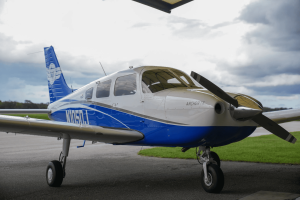
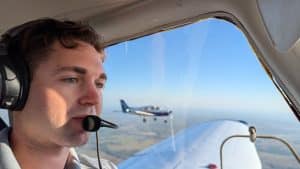
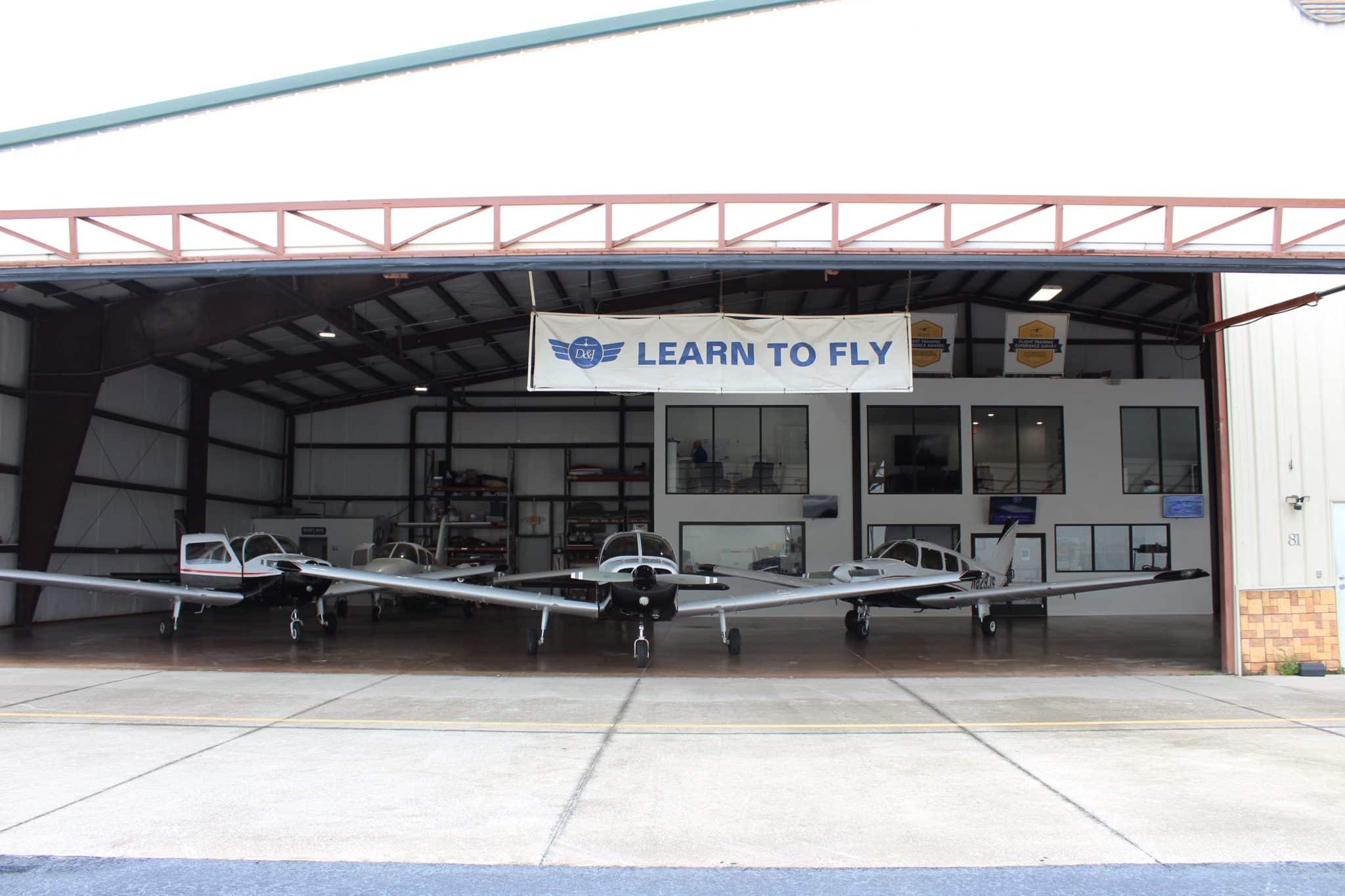
The aircraft pictured above are the same types used for training at D&J Aviation. Flight hours in the tables on this page represent time in these single-engine aircraft or the Seminole twin, either with an instructor or solo after the student is cleared.
Which Flight Training Path Fits the Goal?
Different goals create very different training budgets. The right number depends on where the training is supposed to lead.
- Flying for fun on a personal schedule. A Private Pilot Certificate may be the entire path. Typical cost starts around $15,000+, and many recreational pilots stop there.
- Building a professional pilot career from zero. The Airline Pilot Program packages Private through CFI, CFI-I, and MEI into a $75,000-$90,000 path that generally takes 18-24 months.
- Already certificated and adding one rating. Commercial or CFI-track pilots who only need a multi-engine add-on can set the single-engine sliders to zero and calculate the multi-engine portion separately. D&J Aviation’s 5-Day Multi-Engine Add-On is listed at $6,495, with a new cohort beginning each Monday.
- Still deciding. Leave the calculator on the default Private Pilot Certificate hours. That is the most common starting point.
Why use a “typical” cost instead of one fixed number? Two students training for the same certificate rarely finish with the exact same number of flight hours. Training three to five times per week usually keeps skills fresher and reduces the amount of material that needs to be reviewed. Longer gaps often mean more review, and more review means more billable time. The averages above are intended to reflect what students commonly spend instead of a best-case number built purely for advertising.
Already have a number in mind? Run it through the calculator, then book a Discovery Flight to talk through the training path in person. No pressure and no obligation.
How Flight Training Financing Actually Works
The calculator estimates the cost of flight training. It does not calculate monthly loan payments. Plenty of students finance some or all of their training, similar to financing a vehicle or an education program.
D&J Aviation In-House Flight Training Financing
- Interest rates starting at 10.99% APR
- Loan terms from 24 to 72 months
- $5,000 minimum loan amount
- $125 application fee covering the credit check and processing
- Florida loan tax, commonly referred to as doc stamps, applied when final loan documents are completed
- Preference given to current Private Pilot Certificate holders, with special consideration for military members and first responders
Those terms are published on the D&J Aviation Financing & Payment Options page. The application fee and Florida doc stamp tax are the listed costs beyond principal and interest.
Other Flight Training Financing Options
- AOPA Financing: Personal loans for AOPA members, with income verification and a possible co-signer requirement.
- We Florida Financial: Flight-training-specific loans for Florida residents with no collateral required.
- American Airlines Credit Union: Education line of credit requiring American Airlines employee membership.
- Pilot Finance: Flexible qualification requirements and a $200 information fee that is reimbursed on approval.
Scholarships are also worth a serious look when cost is the main roadblock. The AOPA Foundation, Women in Aviation International, the Ninety-Nines, and the Organization of Black Aerospace Professionals all offer aviation-focused scholarship opportunities. Carl Valeri’s aviation scholarship guide catalogs more than 200 additional options with a combined value listed at more than $120 million.
What Actually Changes the Total Cost of Flight Training?
The calculator provides a realistic starting point. A handful of variables can still move the final number higher or lower.
Training frequency. This is one of the biggest cost factors a student can control. Flying three to five times per week helps keep procedures and maneuvers fresh. Training once every week or two can create more review time before new material can be introduced.
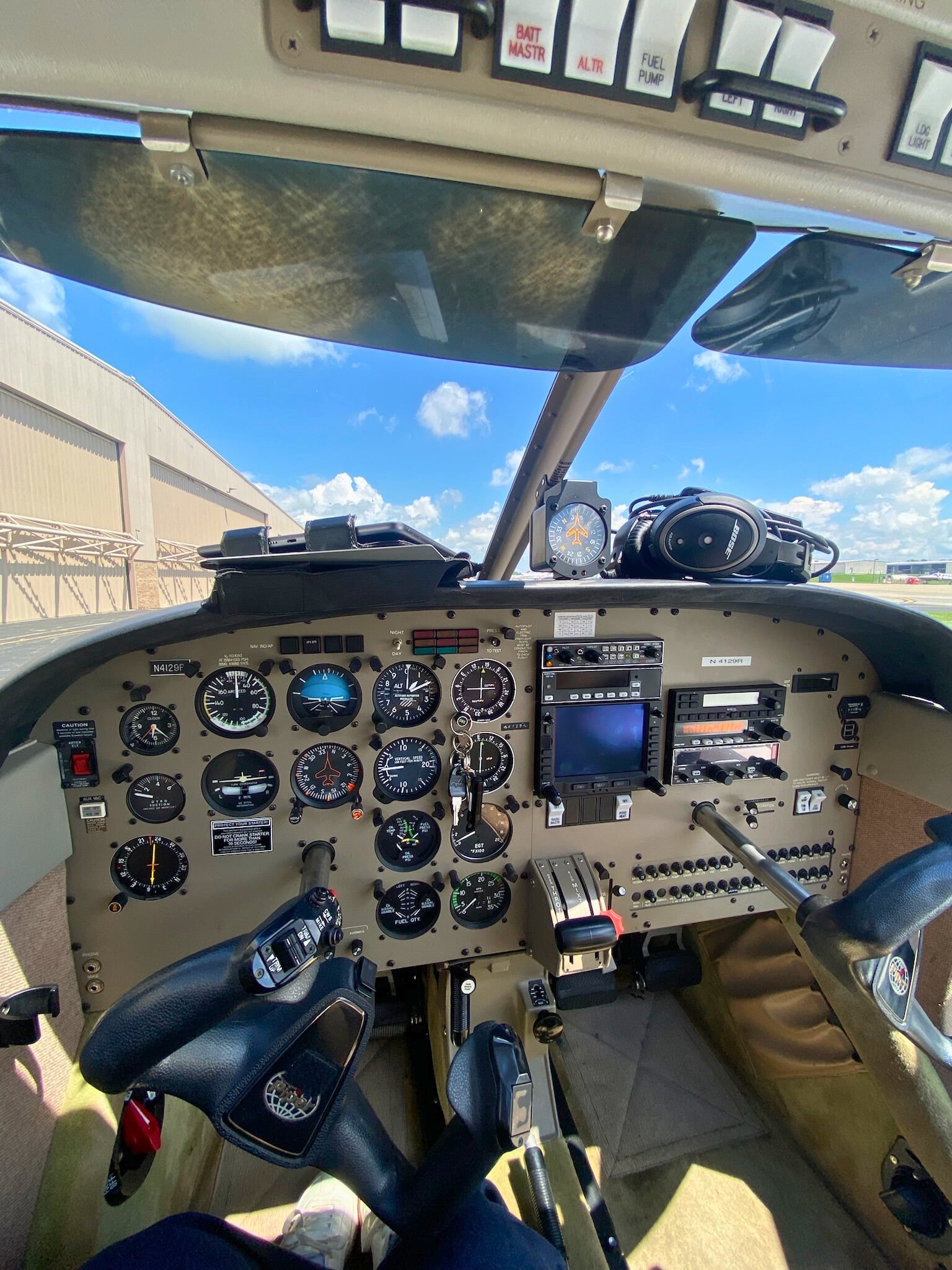
Aircraft type. A Piper Warrior costs less per hour than an Archer TX equipped with a G1000 NXi glass panel. The more advanced aircraft costs more, but glass-panel experience can be useful for students headed toward commercial or airline flying.
Florida weather. Central Florida summer thunderstorms are fairly predictable, although they still cancel lessons. Morning training blocks often avoid more of the afternoon weather and can help keep a training schedule moving.
Checkride readiness. Taking a practical test before the required skills are consistent can lead to a notice of disapproval, additional training time, and another examiner fee. Strong checkride preparation is usually much cheaper than rushing the timeline.
None of these variables are mysterious. They are the normal factors that decide whether a student finishes near the lower or higher end of a realistic cost range.
Real-Average Flight Training Cost vs. FAA-Minimum Quotes
The two pricing approaches answer different questions, and that distinction matters when building a budget.
| FAA-Minimum Quote | Real-Average Quote (D&J Aviation) | |
|---|---|---|
| What the estimate is based on | 40 flight hours, the legal minimum | 50+ flight hours, closer to what many students actually fly |
| What the estimate answers | The theoretical lowest-cost path | A more practical budgeting estimate |
| Budget risk | Higher chance of a shortfall after hour 40 | Expected overage is already reflected in the average |
| Where this style of pricing appears | Commonly used in ads, landing pages, and comparison charts | Used in this calculator and D&J Aviation program pricing |
Forty hours is a real FAA minimum, and some students do finish close to it. The problem starts when that minimum is treated like a prediction. A budget built around a best-case outcome can fall apart quickly once normal training variables show up. This calculator is meant to give Central Florida student pilots a more useful starting point.
Why Central Florida Is a Practical Place for Flight Training

Weather is one of the biggest variables in how long flight training takes, and Central Florida gives student pilots plenty of flyable days throughout the year. Orlando Sanford International Airport (KSFB) and the Apopka area generally see fewer prolonged low-ceiling days than many parts of the Northeast and Midwest. Fewer weather cancellations can mean fewer long gaps between lessons, which helps reduce the time spent re-covering older material.
Airspace access matters too. Training near a towered airport such as KSFB, with nearby non-towered airports available for pattern work, gives students experience in both environments before the checkride. That mix is useful preparation for practical-test flying and for real-world flying after the certificate is earned.
For a closer look at fleet condition, instructor continuity, checkride preparation, and other factors that can affect both training quality and total cost, see the guide to choosing a flight school near Orlando Sanford International Airport (KSFB).
D&J Aviation’s Approach to Flight Training Pricing
D&J Aviation trains pilots from Sanford and Apopka with pricing based on realistic industry averages. That means the published program numbers are designed around the hours students are more likely to need instead of a perfect-case 40-hour scenario.
There should not be a nasty surprise waiting at hour 45 because the original estimate assumed everything would go perfectly. A better pricing model gives students room to plan around normal training realities from the beginning.
The same pricing philosophy powers this flight training cost calculator. If the number looks workable, a Discovery Flight is the next practical step. It gives a future student time in the aircraft with an instructor before committing to a full training program. D&J Aviation can also be reached directly at (407) 590-2550.
Sources
- FAA Part 61.109, aeronautical experience requirements for a Private Pilot Certificate and minimum flight hours.
- D&J Aviation program pages, including Private Pilot, Instrument, Commercial, CFI, 5-Day Multi-Engine, and Airline Pilot Program pricing, current as of 2026.
- D&J Aviation Financing & Payment Options, including in-house financing terms, rates, and fees.
- AOPA Financing, We Florida Financial, American Airlines Credit Union, and Pilot Finance, based on third-party financing terms as published by each lender.
- Carl Valeri’s aviation scholarship guide, third-party scholarship database.
- Florida Department of Revenue, state sales tax rate and Orange County and Seminole County discretionary surtax rates, current as of 2026.
Frequently Asked Questions About Flight Training Cost in Florida
How much does it cost to become a pilot in Florida?
A Private Pilot Certificate, often called a private pilot license, typically runs $15,000+ at D&J Aviation for around 50 flight hours. A full career path from zero experience through Private, Commercial, CFI, and multi-engine training generally runs $75,000-$90,000 and takes roughly 18-24 months, depending on training frequency.
Is the 40-hour private pilot price advertised by some flight schools accurate?
Forty hours is the FAA regulatory minimum for a Private Pilot Certificate. It is not a reliable completion average for most students. Many students need closer to 50-70 hours, so a quote based strictly on 40 hours may understate the final cost.
Can flight training be financed?
Yes. D&J Aviation offers in-house financing starting at 10.99% APR, with 24-72 month terms, a $5,000 minimum loan amount, and a $125 application fee. Details are available on the Financing & Payment Options page. Third-party options listed in the source material include AOPA Financing, We Florida Financial, American Airlines Credit Union, and Pilot Finance.
How long does flight training take in Central Florida?
Most Private Pilot students solo around five to six weeks into training and take a checkride one to two months after that when training three to five times per week. Less frequent flying usually extends the timeline because longer gaps can require more review.
What is the cheapest way to get a private pilot license near Orlando?
Consistent training is one of the strongest ways to control cost. Flying three to five times per week can reduce the review time that creates extra billable hours. Comparing realistic total-cost averages instead of FAA-minimum advertising also helps prevent a budget from being built around the wrong number.
Is any flight experience required before starting?
No. D&J Aviation programs, including the Airline Pilot Program, can accommodate students starting with zero flight hours.
Does the flight training cost calculator include sales tax?
Yes. Based on the source material, Florida generally does not tax instruction services, so the calculator applies sales tax only to the aircraft rental portion of the total. The rates used are 6.5% in Orange County for Apopka and 7% in Seminole County for Sanford. Examiner or checkride fees, FAA written test fees, and pilot gear are not included unless otherwise stated.
Why does the calculator show different totals for Sanford and Apopka?
Florida’s state sales tax is 6%, and the source material lists an additional discretionary surtax of 0.5% in Orange County and 1% in Seminole County. Because the calculator applies sales tax to aircraft rental and not instruction, the selected location changes the total by a small percentage of the aircraft-rental portion.
Ready to see the number? Run the flight training cost calculator above, then book a Discovery Flight with D&J Aviation in Sanford or Apopka, or call (407) 590-2550.